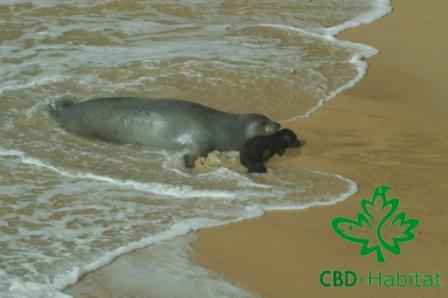
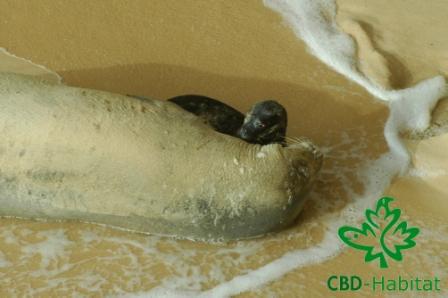
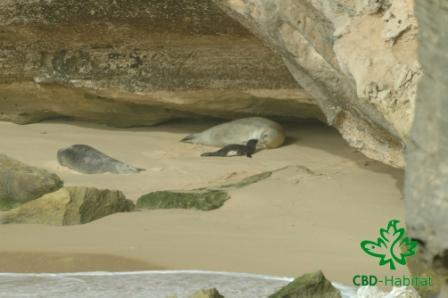
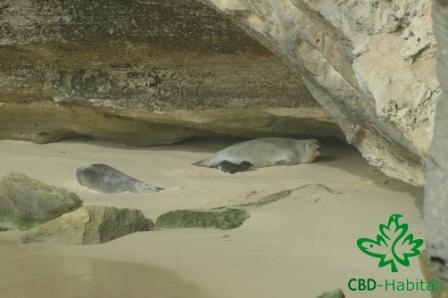
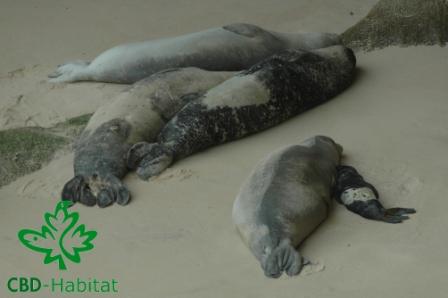
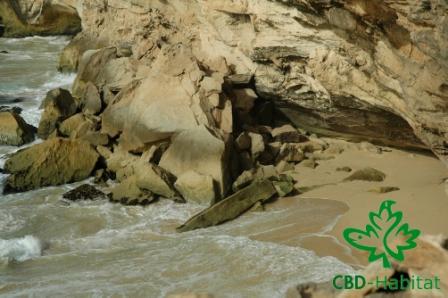
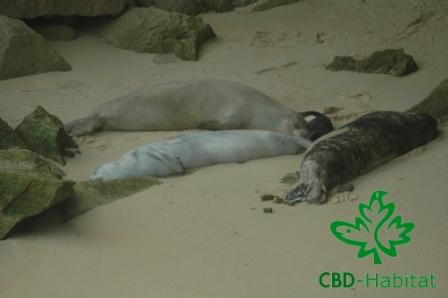
Mediterranean monk seal newborn pup in an open beach

Dear Colleges, CBD-Habitat team has the pleasure to inform you about excellent news coming from the Mediterranean Monk seal colony located in the Cabo Blanco peninsula (Morocco/Mauritania). Last 22 of September 2009, an event of great symbolic and conservation importance took place in the Cabo Blanco Mediterranean monk seal colony, the largest aggregation of this species that still survives in the world. A newborn pup was born in an open beach. As you may know, there are no records of such an event in many decades, in which seals were persecuted leading them to abandon open beaches and use exclusively marine caves to haul out and breed. Therefore, one of the main set of actions of the Action Plan for the recovery of Mediterranean Monk Seal in the Eastern Atlantic (CMS) developed by the governments of Spain, Portugal, Morocco and Mauritania was to promote the occupation of beaches as breeding and resting habitat. During the last 9 years, and under these guidelines established by the Action Plan, the protection of breeding caves and vicinities by CBD-Habitat project has been intense reducing to a minimum disturbances caused by goose barnacle pickers, fishermen as well as the threat of illegal setting of artisan fishing gears in the area. Afters years of continuous efforts, monk seals have began to progressively re-colonize open beaches of the protected area for hauling out. The final step, the use of open beaches as breeding habitat is the event that just took place this 22 of September, beginning therefore a new conservation path for this colony. The pup is a female and is in good shape condition. The birth took place in a beach located a few hundreds of meters south of one of the main breeding caves. This fact joins the progressive recovery of the population, which in 1998 was estimated to have a size of around 100 individuals and that today is almost reaching 200, also a high increase in pup production has produced in recent years being born today in the colony almost 50 pups per year, when 5 years ago mean annual pup production was 24. Although the situation is still very critical and fragile, these last events fulfil us of hope for the future of this population and the species. Best regards, On behalf of CBD-Habitat Pablo Fernandez de Larrinoa Programa de conservación de la foca monje en Cabo Blanco Fundación CBD-Habitat Nieremberg 8, bajo A 28002 Madrid SPAIN Tel: + (34) 91 415 60 52 e-mail: pablo.fernandezdelarrinoa@cbd-habitat.com
participants (1)
-
 Pablo Fdez. de Larrinoa