Final Rule for the Taking of Marine Mammals Incidental to the U.S. Navy Training Activities in the Gulf of Alaska Study Area

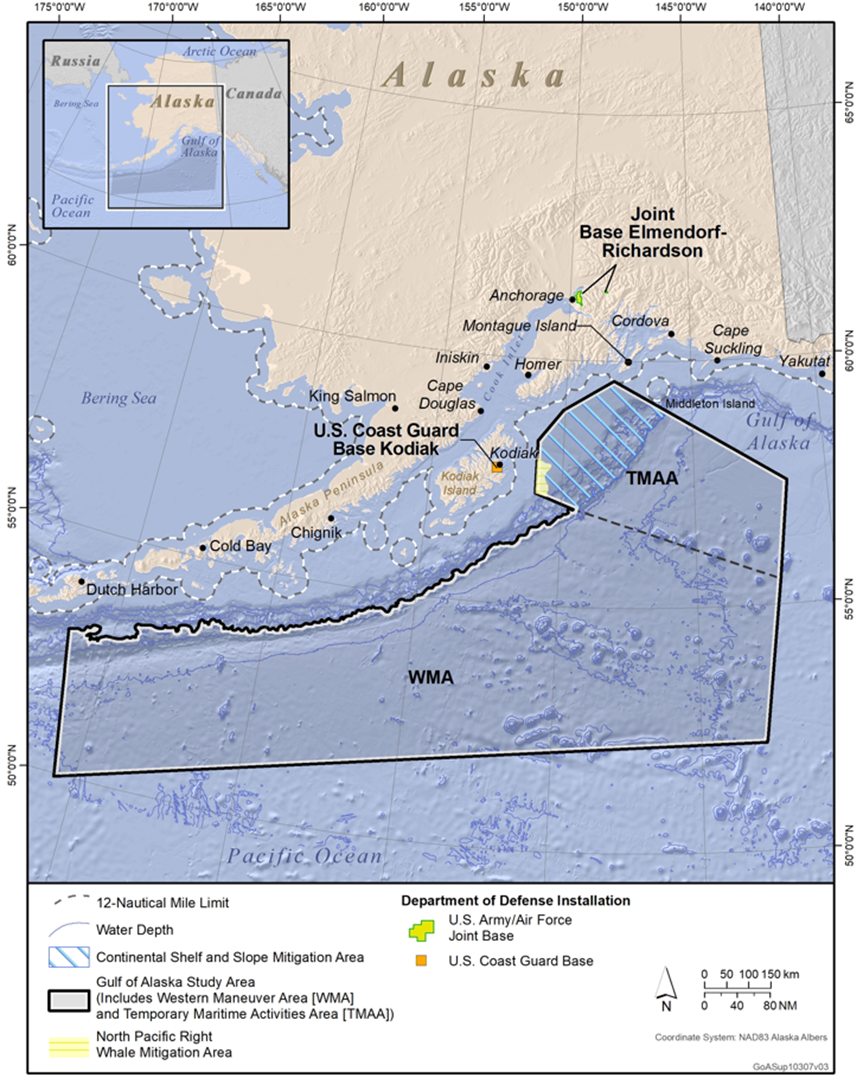
NOAA Fisheries issued regulations under the Marine Mammal Protection Act (MMPA) to govern the incidental take of marine mammals by the U.S. Navy’s training activities in the Gulf of Alaska Study Area over a seven-year period from February 2023 to February 2030. These regulations authorize take of individuals of 16 species of marine mammals by Level A harassment and Level B harassment incidental to the Navy’s use of sonar and other transducers and in-air detonations at or near the surface (within 10 m above the water surface) during training activities. No mortality or serious injury and no Level A harassment from non-auditory tissue damage is anticipated or authorized. You can access the final rule at: *https://www.fisheries.noaa.gov/action/incidental-take-authorization-us-navy-... <https://www.fisheries.noaa.gov/action/incidental-take-authorization-us-navy-training-activities-gulf-alaska-study-area>* . We anticipate the published version of the rule to appear in the January 4, 2023 issue of the *Federal Register*. NOAA Fisheries has also issued an Endangered Species Act (ESA) section 7 biological opinion on this action. Based on our biological opinion effects analyses, we concluded that the proposed action would likely adversely affect, but is not likely to jeopardize the continued existence of the following species: blue whale, fin whale, humpback whale (Mexico DPS), North Pacific right whale, sei whale, sperm whale, and 10 ESA-listed fish species (i.e., ESUs or DPSs). Similarly, we concluded that the proposed action is not likely to destroy or adversely modify designated (or proposed) critical habitat for any of the ESA-listed species affected by GOA activities. NOAA Fisheries’ regulations require mitigation and monitoring measures that are expected to reduce adverse impacts to marine mammals. NOAA Fisheries and the Navy have worked together to develop a comprehensive suite of mitigation measures including procedural mitigations that reduce the likelihood of mortality, injury, hearing impairment, and more severe behavioral responses for most species, as well as time/area mitigation that further protect areas where marine mammals conduct important behaviors and/or sensitive species congregate, which further reduces the likelihood of takes that are likely to impact reproduction or survival. Overall, NOAA Fisheries and the Navy have developed adaptive management and a robust monitoring plan specifically for these training activities to help better understand the effects of Navy activities on protected marine species. Please visit *https://www.fisheries.noaa.gov/permit/incidental-take-authorizations-under-m... <https://www.fisheries.noaa.gov/permit/incidental-take-authorizations-under-marine-mammal-protection-act> for more information on NOAA’s incidental take program under the MMPA. [image: image.png] Geographic Mitigation Areas for Protected Marine Species in the GOA Study Area -- *Leah Davis *(she/her) Biologist, Office of Protected Resources NOAA Fisheries | U.S. Department of Commerce Office: (301) 427- 8431 www.fisheries.noaa.gov
participants (1)
-
 Leah Davis - NOAA Federal