New publication: Acute leptospirosis in rehabilitated seals in Ireland

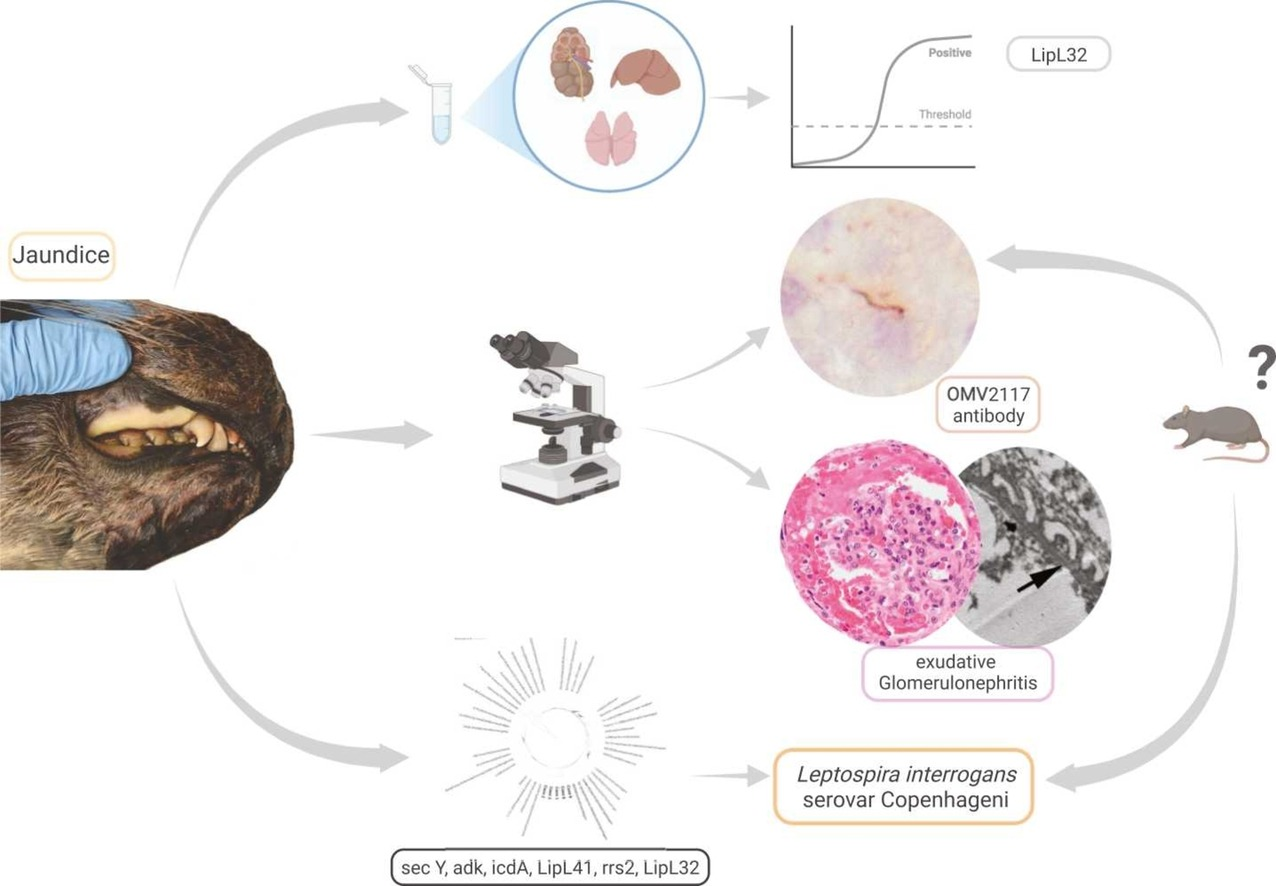
Dear MARMAM community, My co-authors and I are excited to share our recent publication on acute leptospirosis in rehabilitated seals in Ireland : Imlau, M., Russel, T., Browne, J. A., O'Connell, R. A., Gray, H., Doyle, B., & Jahns, H. (2025). *Leptospira interrogans *serovar Copenhageni infection and exudative glomerulonephritis in rehabilitated gray seals (*Halichoerus grypus*) and harbor seals (*Phoca vitulina*) in Ireland. *Veterinary microbiology*, *311*, 110764. Advance online publication. https://doi.org/10.1016/j.vetmic.2025.110764 Highlights - *L. interrogans* serovar Copenhageni caused jaundice in Irish seals in rehabilitation. - Exudative glomerulonephritis and pulmonary hemorrhage were common in these seals. - No involvement of immune complexes in exudative GN as determined by TEM. - Multilocus sequence typing used secY, adk, icdA, LipL41, rrs2, and LipL32. - MLST on tissue samples successfully characterized *Leptospira *to species level. Graphical Abstract: [image: image.png] Abstract: Leptospirosis in pinnipeds is nearly exclusively reported in California sea lions (*Zalophus californianus*), in which the disease is believed to be endemic. There, the Pomona serovar is the predominant cause and severe lymphoplasmacytic interstitial nephritis is the characteristic pathological finding. The present study reports on nine cases of leptospirosis in gray seals (*Halichoerus grypus*) and harbor seals (*Phoca vitulina*) diagnosed over a period of 13 months at the Seal Rescue Centre, County Wexford, Ireland. The seals presented with jaundice, additional clinical signs included labored breathing and coughing, hemoptysis, epistaxis and anorexia. The seals were either found dead or had a clinical course of 6 days maximum. During post mortem examination the main gross lesions were jaundice and varying degrees of visceral hemorrhages. Common histological findings were acute renal tubular necrosis, exudative glomerulonephritis (GN), hepatocyte dissociation and pulmonary hemorrhage. Exudative GN was characterized by markedly expanded urinary spaces filled with extravasated erythrocytes and fibrin in the absence of immune complexes. This unique lesion has only recently been associated with leptospirosis in dogs. Immunohistochemistry and/or PCR detected *Leptospira* sp. in the affected seals. Subsequent multilocus sequence typing using six different primer pairs targeting *secY*, *adk*, *icdA*, *LipL41*, *rrs2*, and *LipL32* obtained sequences that closely matched *L. interrogans* isolates belonging to the Copenhageni serovar. The infection occurred in the center and terrestrial reservoirs such as rats are a likely source. This report details for the first time the presentation and diagnosis of an important zoonosis in seals in rehabilitation. Please feel free to email me if you have any questions or wish to receive the pdf. Best, Michelle *Michelle Imlau* *DVMS (Dr. med. vet.), Dipl. **ECVP* *EBVS®** European Specialist in Veterinary Pathology* Wildlife Division - Co-Head of Diagnostics E: michelle.imlau@gmail.com W: michelle.imlau@unibe.ch Institute for Fish and Wildlife Health <https://www.fiwi.vetsuisse.unibe.ch/> Department of Infectious Diseases and Pathobiology Vetsuisse Faculty Länggassstrasse 122 3012 Bern
participants (1)
-
 Michelle Imlau