Murphy, S., Petitguyot, M.A.C., Jepson, P.D., Deaville, R., Lockyer, C., Barnett, J., Perkins, M., Penrose, R., Davison, N.J.,
and C. Minto. 2020. Spatio-temporal variability of harbour porpoise life history parameters in UK waters. Frontiers in Marine Science.
doi.org/10.3389/fmars.2020.502352.
ABSTRACT: Harbor porpoises exhibit early maturation, relatively short gestation/lactation periods and a faster rate of reproduction as compared to other cetacean species. Intrinsic and extrinsic factors can influence both population vital rates and population
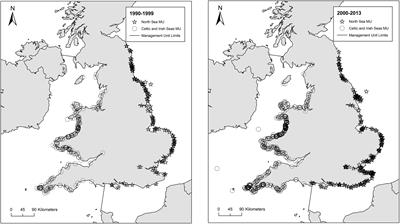
structure, which ultimately cause changes in dynamics within and between populations. Here, we undertook a retrospective analysis of mortality data collected over a 24-year period for assessing life history traits of the North-east Atlantic harbor porpoise
population. We use time-period specific models for key life history relationships that considered cause of death of individuals (as a proxy for health status), sex and management unit (MU). Sexual variation in asymptotic length, asymptotic age, average length
at 50% maturity (L50) and average age at 50% maturity (A50) were observed, with females attaining a larger asymptotic length, larger L50, and delaying attainment of both sexual and physical maturity, compared to males. While females are constrained in their
minimum body size due to giving birth to proportionally larger offspring, males exhibited more plasticity in size at sexual maturity, enabling re-allocation of available energy resources toward reproduction. Data were then used to compare biological parameters
among two porpoise MUs in United Kingdom waters, both of which in the current study exhibited reduced reproductive rates compared to other geographic regions. In both MUs, females significantly increased their A50 and males significantly declined in their
L50. An increase in the age at asymptotic length was also observed in both sexes, along with a significant decline in the Gompertz growth rate parameter that was more apparent in the female data. While availability of suitable prey resources may be a limiting
factor, a combination of other factors cannot be ruled out. Porpoises in the Celtic and Irish Seas MU were significantly larger in their maximum length, asymptotic length and L50 compared to porpoises in the North Sea MU throughout the study period, suggesting
limited gene flow between these two MUs. These results justify the maintenance of these harbor porpoise MUs or assessment units, as two separate units, within the range of the North-east Atlantic population, and for indicator assessments under the EU’s Marine
Strategy Framework Directive.
Dr Sinéad Murphy
Lecturer in Aquatic Ecology
Marine and Freshwater Research Centre
Department of Natural Sciences
School of Science and Computing
Galway-Mayo Institute of Technology
Dublin Road, Galway, Ireland, H91 T8NW
* sinead.murphy@gmit.ie
sites.google.com/view/sinead-murphy
researchgate.net/profile/Sinead_Murphy2